Bern, 3 October 2026 · News and Classification
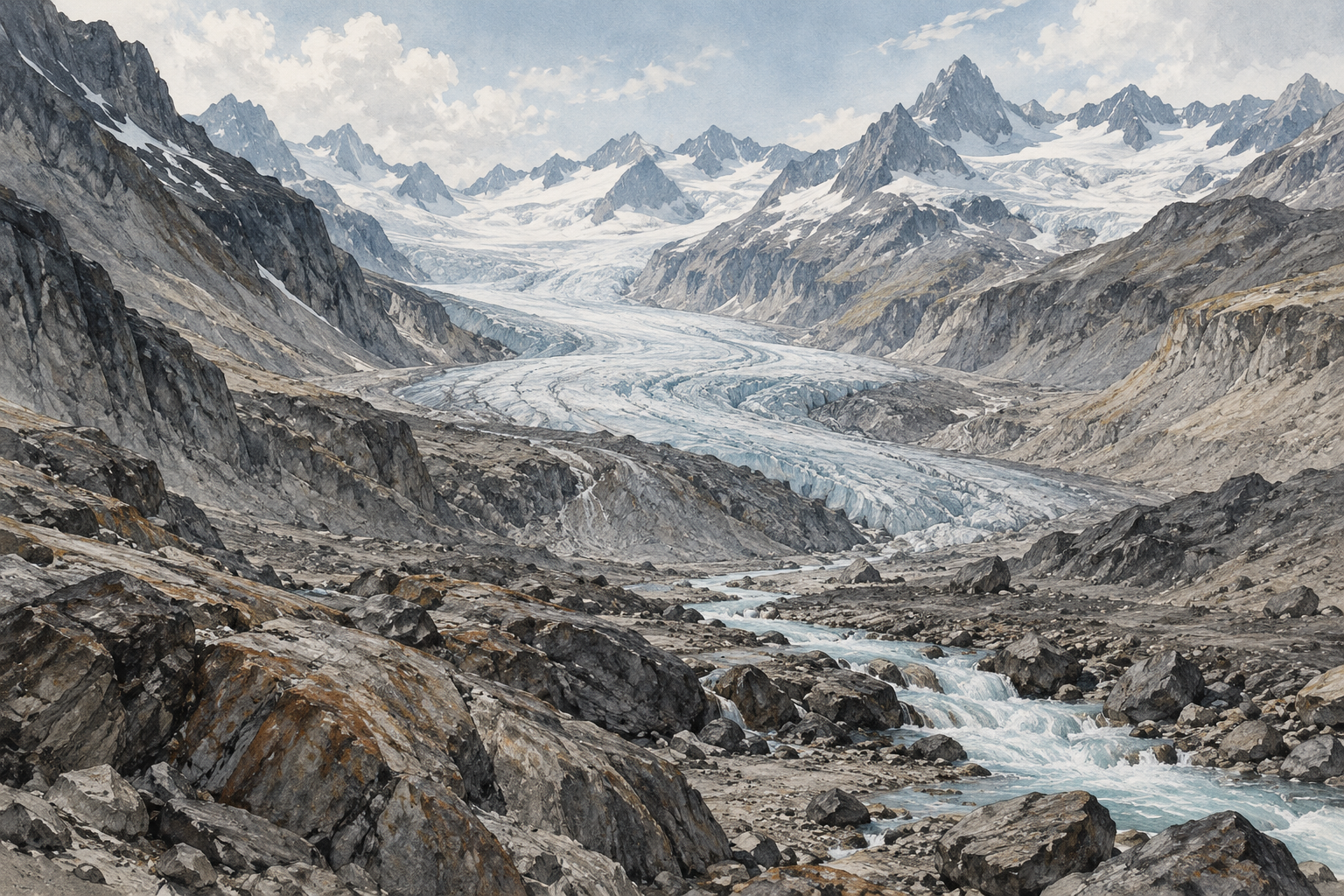
The Swiss glacier measuring network GLAMOS calculates the loss of ice volume in the hydrological year 2025/26 to a high degree of 5.5 percent. The balance sheet is based on measurements on 23 glaciers. Since 2021 nearly one fifth of the volume has been lost. [1] The balance sheet published in early October shows how rapidly a familiar part of Switzerland changes.
Little snow, long heat
The communication of SCNAT and SLF describes the meeting of a snow-poor winter with heat waves from May to September. The protective snow cover disappeared early. Even large glaciers such as the Aletsch and the Rhonegletscher experienced exceptional losses; individual small glaciers disappeared completely. [2]
In these figures, the reference value is crucial: a loss in volume describes the amount of ice. It cannot be read as the equal retreat of the glacier tongue or as an identical change at any location.
A memory that delivers its stock
The National Center for Climate Services explains the importance of the glaciers for the water balance: they store precipitation for a long time and deliver water to streams and rivers, including Rhine and Rhone, just in hot, dry summer phases.
According to the Federal Office for the Environment, the Swiss groundwater reservoirs continue to provide sufficient drinking water. At the same time, climate change is changing the seasonal water management of the rivers. [4] The glacier balance is therefore not proof that Switzerland is directly out of drinking water.
Classification: The decisive question is "wann?"
From the editorial point of view, the new numbers... [truncated for model]