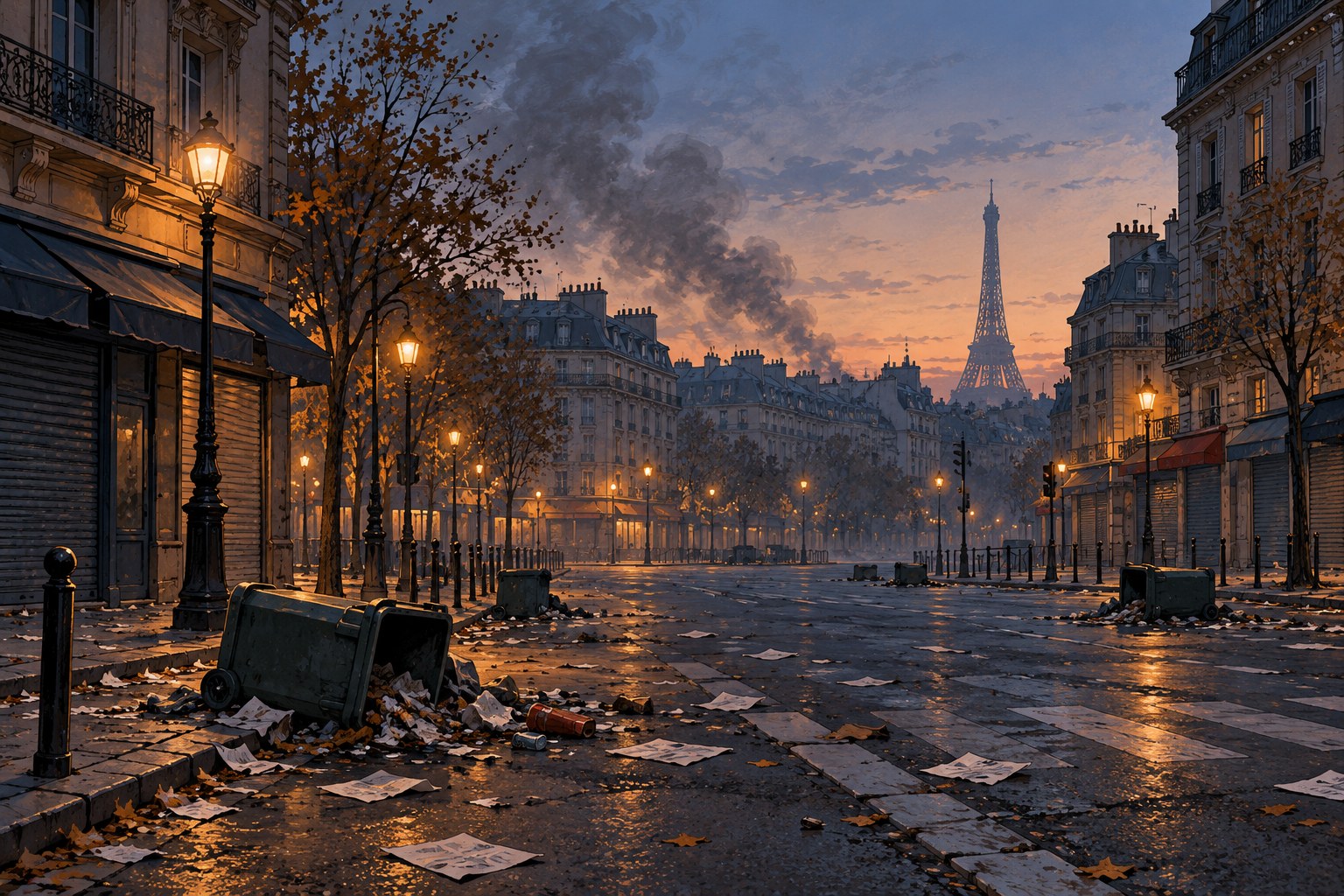
Protests on Saturday, October 17, shook cities across France. The mobilization began with students protesting teacher shortages and poor conditions in schools, then widened to unions, workers, families and the Yellow Vest movement. Anger over the cost of living, high fuel prices, public services and social inequality also joined the mix. That range helps explain the size of the demonstrations, but it does not justify violence.
The turnout is disputed. Interior Minister Laurent Nuñez put participation at about 550,000 people across 110 marches. The CGT union and student organizations estimated around 800,000. Nuñez reported about 400 arrests nationwide, most involving adults. These figures come from different sources and are not directly comparable.
Many marches remained peaceful. Alongside them, Paris and several other cities saw fires, looting, damaged shops and attacks on public buildings and police. In Lyon, the tourist office was set alight; in Marseille, people briefly entered city hall. Such acts were not an inevitable consequence of protest. They also harmed workers, residents and shop owners who are not responsible for the political disputes.
A political demand or a difficult social situation does not make assaults, arson or looting acceptable. People who demonstrate peacefully should not be conflated with violent groups. That distinction protects protesters from collective blame and protects the right to demonstrate from attempts to discredit it through violence.
The state must maintain public safety, but its response must remain proportionate and open to scrutiny. Reports of injuries and the use of tear gas, water cannons and other measures deserve careful examination, just as attacks on people and buildings do. An arrest is not a conviction. Responsibility must be established through evidence of specific acts and due process.
The protests show how different grievances can converge in the streets: school conditions, prices and the state of public services. The French government faces two tasks at once: prevent and investigate violence while taking the concerns of young people, workers and families seriously. Looking only at images of destruction overlooks the many people who protested peacefully. Romanticizing violence betrays the concerns that brought people out in the first place.